Showing posts with label 3D vision. Show all posts

Tuesday, March 3, 2015

Jaw clenching, Vision Therapy and earthquake resistant structures

Personally I learn a lot from reading/listening up on vision rehab and anatomy but I learn just as much from having conversations with other strabismics. I think it's a practice that could be useful to anyone with any problem. Don't compare yourself to people with a very differing, in this case neurological, background. Learn from people who are similar to you and dealing with similar day-to-day problems. What follows is a blog post constructed on this type of conversation.

PASQUALE: Hi Michael, in many blog entries you mention jaw clenching. I too have said that I engage numerous facial muscles while I try converging and diverging at different targets.  It feels like the brain is recruiting other muscles because it still hasn't figured out how to properly use the eye's extra-ocular muscles.

MICHAEL: I always think of it like learning how to do something with your left arm (unless you are left-handed). First you use your entire arm, often in a contorted way. Then you move on to more specialized movements of the joints and ultimately you can do things smoothly having very fine control over your arm, hand and fingers. Theoretically the potential for improvement is limitless.

Let's transpose this to the visual realm. At first, when trying to accomplish a visual task, you are doing it very clumsily and inefficiently. Your brain is trying to accomplish a task which requires fine ocular motor skill but it's not succeeding because of a lack of (lasting) control. Because many of us are hardheaded we redouble our effort and adjacent regions and resources like facial muscles are drawn into the process to little or no avail. Not good. Instead of redoubling our effort employing a very limited set of visual skills we should go back to the drawing board and improve and multiply our skills. Technique is more important than 'brute' force.

The visual system involves six of the the twelve cranial nerves. That's a lot of guns to fire and potentially misfire. When I experience jaw clenching after too much reading or just a visually or otherwise stressful situation, that implies I've gone beyond my current visual skill level and I need to back down.

Trigeminal nerve - 5th cranial nerve

PASQUALE: Have you figured out exercises that eliminate engaging other muscles except for those needed to coordinate the various components of the eyes.

MICHAEL: Well, any activity that encourages 'the eyes', meaning the appropriate muscles and neural processes associated, to do the work without recruiting other muscles. That implies not going too far beyond your current skill level and paying a lot of attention without getting frustrated. For me it means slowing down and lowering expectations while gathering finer motor control. As long as my jaw doesn't clench, I'm in the safe zone. Once I start hurting, I'm overdoing it. It's not always easy to be patient and sometimes there are just visually stressful tasks I have to deal with. Then I'm tired, dizzy and in pain.


When thinking about this problem I'm reminded of something I learned about earthquake resistent structures. There's no such thing as a completely earthquake resistent building but you can improve a buildings capacity to withstand external shifts to a large extent. There are various approaches you can adhere to when going about the seismic retrofitting of a structure.
- You can increase the global capacity of a structure. (strengthening)
- You can isolate the foundation so the structure can shake on it. (partial flexibility)
- You can impose intelligent structural changes. Structural vibration control technologies minimize forces and deformations. (flexibility)
The last option implies that various individual parts of the building can move or flex allowing for shock absorption.

Vision Therapy is akin to a seismic retrofit for the visual system. You make structural changes in how it works and learn how to control and flex individual parts. You learn to lean into a quake rather than stiffening up.  That way you can withstand more external demands, with reduced energy drainage and avoid collapse of the structure/system.


For me, eye teaming remains a big challenge but I'm getting there. A related challenge is to gain more independent control over vergence and accommodation, i.e. taking on any binocular stance while manipulating my eye lens as I please. Either component should have limited effects on the other one's performance and there should be a certain ease in doing this. Just like using indivudual fingers while playing the piano.  An increased 'isolation' of these visual components gives more freedom of movement. To continue the piano anology, you'll be able to play 'visual Mozart' instead of just hitting the keys indiscriminately with all fingers at once.

As far as particular exercises are concerned, there are plenty of options to choose from if you understand the underlying principle. Magic eye stereograms, prism/spherical flippers, Eccentric Circles, Aperture rule, even just playing freely with your vision, ... Many VT practices are grafted on this idea one way or another. They are looking to improve smooth eye teaming, lens focusing and then increasing skill level by adding more activities (balance, body coordination, cognitive skill, ...).

In that respect, I particularly liked a quote from the interview I did with Mark last month. It illustrates this point very nicely.
MARK: I still have strabismus but I have a greater degree of control. The reduced suppression helps. I can line everything up that I need for stereopsis (fixation on an object, in focus, no suppression, awareness of peripheral vision etc.). It can be an enormous effort but it's like any other form of learning. Repetition is the key and progress, however slow, will be made!
The only catch 22 when talking about all this 'control' is that you won't necessarily attain it by going about this like a control freak. Be relaxed, patient but determined.

One month later... 

PASQUALE: It has taken me over eight months to finally feel that my brain can move my eyes with better coordination without trying to recruit a battery of other facial, non ocular muscles. I have gone through an entire slew of other muscles including those around the temple region, jaw, even moving my ears. The worse was when I actually felt my upper jaw putting tremendous stress on my entire skull as if trying to separate one from the other. I have to say that I see more positive progress now that my brain isn't trying to move my eyes through the recruitment of all those other muscles.

Wednesday, December 3, 2014

Check-up 9: Our four year anniversary

On December first I had my half yearly optometric evaluation. Sight in both eyes is good but the axis of astigmatism in my left eye has shifted marginally.

This is my current Rx.
OD: +2.50
OS: +2.50 cyl -1.0 axis 35°

When testing my binocular vision my ocular motor abilities are approximating what it should be. When testing sensory fusion things are less clear. Looking through an haploscope using some basic targets I do perceive the suppression controls and have what looks like a consistent and fused image. Based on this my optometrist tells me I have 'central and peripheral fusion'. I'm not so sure though. Using anaglyph (stereo)targets I do not perceive 'luster' fusion, rather I perceive constant switching between red and green. It seems hard to agree on a definition of fusion. But it is true that even though I might still have some form of intermittent and partial suppression at times, it is very easy to consciously break that suppression. Nonetheless it might still be too conscious a decision, especially while in motion. (More about the issue of unconscious intermittent and partial suppression and a potential solution in later blog posts).

In stereo targets, as seen through the haploscope, I can discern the correct relative distance between various elements of the picture by the way my eyes converge or diverge while viewing each of them in turn. When using polarized stereomaterials I do not directly perceive any 3D. To sum up, during none of the tests did I perceive any salient 3D but there are promising signs. "Certainly no bad news today.", the optometrist said.

Revised 'timeline' - Last surgery was in August 2009


The challenge as a chronically untreated young adult with strabismus would have been to overcome the neurological atrophy and the decay of my vision, both motorically as perceptually, as it unfolded ever since my visual development went array. Compared to the current undertaking, that would have been relatively easy. Not easy, but relatively easy. However, I (and my optometrist with me) would say that eighty percent of my recovery is about overcoming the abysmal results of the surgeries I have undergone as a young adult (ages 16, 18, 19) completely obliterating my academic and professional prospects. That is why I am about to enter my fifth year of Vision Therapy.

In order to add more perspective, I'd like to translate and paraphrase some of the conversation I had with him in Dutch.

MICHAEL:  "Let's forget I've been doing this for four years and I were to walk into your office for the very first time in my current condition. What would you tell me?"

G. NAEGELS: "I would tell you you have a slight exophoria and all physiological preconditions for stereopsis recovery are present. In view of the fact that you only developed strabismus at the age of three (accommodative strabismus) your recovery prospects back then would have been excellent. At that age it is very likely you have already SEEN in stereo up until the binocular disruption. I'd recommend for you to try and re-acquire stereo vision because it will greatly improve the quality and stability of your vision and life in general. I think it's within reach now. But it has to happen of course."

MICHAEL: "I'll have to make it happen then."

G. NAEGELS: "That being said, I still think that deontologically speaking I made the right call four years ago by telling you there was not much hope for recovery. Not every patient is as motivated and persistent as you are. I could not have foreseen that and I would not want to arouse expectations that can not be met by the optometrist alone. I've never seen someone so engaged in his recovery. I'm very happy to may have witnessed this in person. It's a pleasant surprise for me and it reaffirms what we are doing here."

MICHAEL: "Thanks. I have no other option so I act pragmatically. It's swim or drown. It's that simple. This HAS to work out."

Wednesday, September 24, 2014

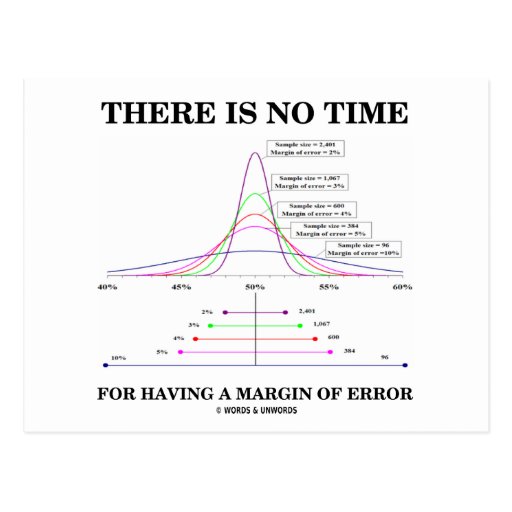
The margin of error

Interestingly, my strabismus was developmental since the age of three but in a relatively short amount of time I lost many of my adaptations (suppression, strabismic ways of eye teaming) to cope with misalignment of the eyes. First my suppression gradually declined because of life style, i.e. overly zealous studying, and then the way my eyes moved and alternated was abruptly changed through eye muscle surgery. This left me without any reliable adaptation to deal with my abnormally developed visual system.

So the only option then, is pick up the pieces and start all over again. My visual system seems to act as a binocular system that was disrupted rather than a visual system which developed strabismically. It has no real inclination, or possibility for that matter, to go back to monocular viewing, alternation or any of its other former ways. There's a strong incentive to use both eyes, and it's constantly trying to do so, with varying rates of success. It's a binocular system whose inability to move its eyes accurately is cramping its style. Because of its poor handling, my case more resembles strabismus which was acquired later in life through brain injury than that of a developmental strabismic equipped with coping tools safeguarding functionality.
The level of spasticity or lack of control when it comes to eye movement is fortunately declining. It has been declining for some years and every improvement is a win. As can be seen in previous video posts, it's getting harder to spot there is any problem at all! However, automation is the goal, not merely the ability to execute the movements using disproportionate amounts of attention and energy resources.

Despite already increased accuracy and speed, there is still a considerable margin of error when it comes to my eye movements. I can not entirely rely on solid binocularity yet. It's either right or not right, and if it's not right you need to waste extra energy on correction which could have been used for observation and interpretation of visual input. Another issue associated with the continual trial and error, and the exertion it requires, is the build up of tension. Because of the lack of eye muscle control, surrounding areas of my body (face, jaw and gradually the entire body) start to tense up. The efforts to keep my left eye in check and attempts to keep up binocular performance will often result in jaw cramps on the left side and headaches. In order to avoid such an escalation it's recommended to allow for a margin of error and try to cut the visual system some slack.

What activities allow for a margin of error?

Reading vs General Navigation

Given this larger than normal margin of error, I prefer to avoid situations which require specific eye behavior.and do not leave much room for error. An obvious example of such an activity that requires precise and infallible eye movements is reading. There's a number of different ways to read but they all require impeccable eye movement control. That's why reading with audio back-up is much more agreeable with me. There's more room for eye movement error that way.

In contrast, the general observation of a road, square or real life situation can be done using an endless variety of eye behaviors. Some are definitely more effective than others but you can still get around.  For someone whose eye behaviors start looking deceptively normal such activities requiring an accuracy level of 'approximate' are starting to be fine. It's starting to get less overwhelming, less out of control. More ocular control will be very welcome over the upcoming year(s) but it's already quite manageable.

Driving is actually easier than walking or running because my body and head stay more or less in position, especially on a highway. Because the road and the mirrors are much larger than the words on a page while reading, and driving is less cognitively taxing, my current level of eye control is okay for driving. In fact, driving is pretty calming as it allows for staring and the use of peripheral vision.

Individuals vs Groups

The difference between reading, general viewing of scenes and driving is pretty straight forward. Here's something which might be more unexpected, or maybe not. Perhaps people without eye muscle palsy experience this difference too. Meeting with one person is a lot more taxing to my visual system than meeting with a bunch of people. I don't look strabismic anymore so it's not about  appearance. Meeting with one person just doesn't allow for much of an error margin when it comes to eye behavior. When talking to someone you have to look at that person. That's specific. It's likely you will have to hold your gaze steady but every once in a while you have to look away. The social situation dictates your eye behavior and your eye muscle control system better be up to the task. Most people I know and enter in contact with are aware of my vision issues and if I do act a little more peculiar than normal and start staring in the distance, I just explain. No biggy. Nonetheless, I try to keep up the eye contact dance. After all, it's good practice! It's also an important means of communication but you need the physical eye fitness to do it. 

When meeting up with larger groups, there is more room for errors in eye movement. You can just listen to the conversation and stare randomly every so often. Attention is divided and you don't always have to look at the person who's doing the talking. It clearly also depends on how familiar you are with the group. An entirely new group in an new environment is a probable overload. I will have trouble moving my eyes to explore and keep up with the new situation, people and environment, especially over extended periods of time. Not much room for eye movement errors in that case because you'll preferably need your brain to deal with the situation rather than an eye movement deficiency. You're losing attention to something that should be working automatically.

Factors that decrease the margin of error

Short term

When I'm going to do something relatively visually taxing, which includes many daily activities in varying degrees, you want to have me well fed and well rested.

I burn calories like you wouldn't believe and when I get hungry my accuracy diminishes and errors occur more frequently. So I'm eating a lot of the time these days as my appetite returned after a couple of very stressful years. This has a double benefit. It more or less keeps up my visual performance in the short run and makes me look less emaciated in the long run.

Naps seriously improve my vision. Even an half an hour nap will seriously improve my visual performance for the night. Don't be a hero, take naps.

Basically I'm just a baby learning how to see. Now we know why they too eat and sleep all the time.

Long term

Current practice consists of finding ways to allow a margin of error while slowly crushing that same margin as time goes by. Sometimes it is not possible to avoid situations that are too visually stressful. Then I do have to hurt myself by pushing it too far, resulting in tension and headaches. But by minimizing the time I exceed my limit and by granting the visual system relative rest, the comfort zone slowly expands.

Eye control and eye alignment should be invariable but is, in my case, all to often variable. Invariable and reliable eye movement control is a great advantage when executing bottom-up visual processing (taking in new visual scenes and observing them) and top-down visual processing (combining stored memories with what is seen). Virtually any human activity employs these kinds of visual processing. Therefore, I'm very curious about the dormant potential that might be uncovered as the rate of movement errors further declines. Stereo vision, for one.   If I ever want to live a 'normal', independent life, there's no other way but to keep working on accuracy, speed and stability of eye movement.


Eye movement control and the use of glasses for hyperopes

It's still frail and not ready to be stress tested, but it's happening. As my gaze gets steadier and the margin of movement errors declines, there is less need for my glasses. As vergence gets easier, I can focus more on the accommodation aspects of visual training. Seamless interaction and collaboration of vergence and accommodation is crucial to obtain a lasting end result in VT. As I'm farsighted (+2.5 in each eye) this evolution could have been expected. The glasses are more a way of avoiding fatigue and thus gaze instability than a way of providing better visual acuity. In fact, I often have to look over them to read things far away. As gaze stability is maturing I actually see better in daily life without the glasses. Ultimately they will just be reading glasses for near point work. Sometimes it even has a calming effect to take them off, even refreshing in a way. I'm still wearing them daily but every so often I let my visual system have a go on its own. Even though my glasses are rimless, it feels different not to wear them. I can believe people have an easier time seeing 3D without glasses or with contact lenses. Glasses have a way of distorting light and possibly binocular vision. However, I'm not going in heals over head... They are a useful anti-fatigue tool while I acquire more eye movement control. 

Wednesday, May 28, 2014

Session 72: In pursuit of more speed, accuracy and consistency

The foundation has been put in place. Finishing it up by perfecting the collaboration between vergence (eye movements) and accommodation (manipulation of the eye lens by your tiny muscles in the eye) and increasing capacity will be the closing deal. Major physical restrictions have been largely eliminated. More speed, more accuracy and more endurance. These will be the stakes as I move towards normal functionality. The time that I could not even participate in certain training activities has passed. Finally most activities are accessible and progress will, rather than being merely damage control and laying foundations, start to improve daily function and influence the way I can interact with my environment. Things are about to get extroverted instead of introverted.

“When vision is working well, it guides and leads; when it is not, it interferes.” - John Streff

The coming year we will go over that speed bump and make my vision guide and lead rather than interfere with my behavior. Right now my vision deficits still monopolize my life but I can feel and imagine how it will be as I gradually break through that 'visual firewall'.

Not only are all exercises accessible now but I'm making tangible, numerical progress at them and we can compare it to 'the standard values'. Before I also made numerical and tangible progress but it was still so subpar it sometimes seemed a Pyrrhic victory. At this time, I have entered the charts approaching normal function. This is totally new and makes it more fun. It's a game, not a tragedy. Three years and five months into the game I feel as optimistic as ever. Everything indicates a successful outcome and things keep moving into the right direction. When (eye) muscle tone, visual input and sense of balance will be synced up, I'm in for a major brain fart.

When testing my abilities on the biopter, both divergence and convergence, I could successfully execute up to slide 5 (out of 8), whereas last year I'd be stuck at slide 3. Well, pre-VT I'd be stuck at slide zero. :D

When playing with the vectograms today, which are supposed to bring out stereopsis if you already possess that skill, I was asked to 'grasp' the portrayed characters. If percieved correctly with the polarized glasses they would be floating midair. I don't see them floating at differing distances but when grasping for them my arm movement apparently more or less reflected the appropriate distance, or at least the right hierarchy.


*Spoiler alert* The king was closest, the monopoly guy furthest and the girl in between in terms of 3D distance, if I'm not mistaken. So there's that intuitive feeling telling me something based on my vergence movements I suspect. They are still too sloppy to be good, but we'll deal with that over the next year. Can't wait to put the cherry on that visual cake. I've been told Americans put cherries on everything. On top, on cakes, on your lips, in the fridge... Wherever you put it, I'll put it there.


Next time: "Standing on your head, yoked prisms and prism flippers".

Wednesday, October 23, 2013

Things I'm starting to enjoy lately

For one, it is getting easier to compare prices in the supermarket. I also started to like watching people go by juxtaposed to a stationary background. Moreover, there's a special kind of joy to tracing a moving car with your eyes while being in motion yourself. It's amazing you and the car are in motion and you can adjust your eyes as for it not to go double! I'm sure many of the visually spoiled out there don't even think about things like that, but there's more!

I'm starting to understand the concept of sightseeing I think. I have done my share of traveling before but I never really enjoyed views that much. I liked traveling because of different reasons. Now I can point both of my eyes at the things I am looking at and, even though I don't really see any 3D yet, it already feels different. It's different from my 'old 2D'. Somehow it's more overwhelming. Seeing is starting to be a pleasure. Not every second of having my eyes open implies suffering. My new appreciation for my undoubled vision extends to renewed appreciation for the environment that surrounds me. It also struck me that many people experience their first stereo moment while looking at unusual objects or scenes. Additionally, Oliver Sacks wrote about how detrimental being in a confined hospital room for several weeks had been for his sense of stereopsis. So why not get out there?

Since Brussels hosts most EU institutions and 25% of Brussels' population is of muslim origin, it is home to one of the most diverse populations in the world.
People of foreign origin make up nearly 70% of the population of Brussels, most of whom have been naturalized following the great 1991 reform of the naturalization process. 32% of the inhabitants are of foreign European origin, and 36% are of a non-Western background mostly from Morocco, Turkey and Sub-Saharan Africa. Among all major migrant groups from outside the EU, a majority of the permanent residents have acquired Belgian nationality. -  Wikipedia
With its three language communities (Dutch, French and German) Belgium as a country wasn't lacking in diversity to begin with. I moved to Brussels in a terrible state and haven't had much of an opportunity to get to know it. In another attempt to combine strab-business with pleasure, I decided to go sightSEEING regularly.

Taking the metro is starting to get much more pleasant for me. Because of my improved vision I feel much more in control already and am starting to feel less motion sick. I'm also getting to understand why one can enjoy people watching. Especially with all this diversity it is fascinating to just listen to and watch people in Brussels.  Moreover, it's fun to stand at the back of a carriage and take in the entire trains interior view and see the movement in comparison to its surroundings.

I don't even have to go far to see some interesting things. Who needs Paris or Rome when you have Brussels?


The horses on top of that monument for instance did something funny to my vision I can't really put my finger on. It wasn't 3D though... It's like you are somehow opening the perceptual gates by aligning your eyes. It doesn't happen instantaneously but if you keep doing it over an extended period of time things will start a-changin'. I often must look like a 5 year old watching the Lion King for the first time, or at least I do on the inside. I enjoy the view but it quickly drains me. So when I'm running empty I take the metro home. I always make sure to have a fairly easy exit strategy so it remains a positive experience and doesn't become a drag. Anyways, no one ever said you couldn't bring some culture into the strab-business. ;)

Saturday, September 21, 2013

Book review: Fixing My Gaze by Susan Barry

After I read 'Fixing My Gaze' for the third time in three years I decided to write a long overdue review about the book that got this whole VT party started. I first read it during the summer of 2010. At the time I was undergoing all kinds of personal, academic and medical crises and I realized I was on my own. So I turned to the oracle that is Google and went looking for better alternatives to help me get rid of my double vision. This time in English. I discovered Vision Therapy. I was already flabbergasted by this whole new universe of useful information on vision therapy related websites which I was reading with great effort. Then I found out about a book called 'Fixing my gaze' and watched some Youtube videos by the author of the book named Susan Barry. So... THERE IS A SOLUTION NO ONE HAS TOLD ME ABOUT?! Aside from the cerebral double vision short circuit all kinds of fireworks were going off in my brain. The situation was bleak but now there were new elements to consider. Quickly I ordered the book and when it arrived I read my way through it in a less quick post-op double vision strab kind of style. This book contained the information I had needed ever since my eyes started crossing at the age of three and it was clear I would have to do whatever it takes to make things right again despite of the twenty year delay and medical mishaps. Denying the information in this book, as some 'VT critics' seem keen on doing, should be listed as a criminal offence. After all, the book only talks about healthy visual brain development and has the endorsement of two Nobel prize winners on the back...

Needless to say this book got me through some grim times. If it was not for the constructive perspective and the better outlook this book provided I might not have been sitting here at all. That's something unusual to say in a book review I guess. Even reading it for the third time gave me another boost of much needed energy. Every time I read it I am relating more to different parts of the book. Partly because of the fact that I was younger back then and partly because my vision has actually changed over the years! Some parts I couldn't relate to simply because of not having had that visual experience. The first time I read it I wasn't just younger, I had the vision development level of a baby. Worse, a visually wounded baby.

Something that struck me every time I read it is the fact that suppression is a more energy consuming way for the brain to see as opposed to normal binocular viewing. These adaptive mechanisms such as suppression are very effort consuming. Smooth binocular viewing is the most efficient way to use cortical real estate. That makes a lot of sense of course. It's just surprising how far some people can get removed from that healthy integrated viewing position. As an eye doctor you got to be very ignorant about what you are doing to have patients end up three or four years of rehab removed from such a healthy situation. Sadly the brain does not adapt overnight but fortunately it does adapt. This is masterfully described  in various passages, notably the one covering 'the lazy eye myth'.

All in all the most touching moments in this book are the ones in which Susan Barry attempts to describe how it feels to see in 3D. Paradoxically, there is no way to describe a qualia as powerful as stereovision with language. This makes it all the more tantilizing!

'Gaining stereovision, I thought, would augment my perception of depth but not change it in any fundamental way. So, I was completely unprepared for my new appreciation of space and for the deep feelings of joy and wonder, the enormous emotional high, that these novel sights gave me. To experience for the first time seeing the most ordinary things in stereo feels like scaling a mountain and witnessing your first mountaintop view.'

Or the description of Rachel, someone who was also previously stereoblind. 'It was as if I had stepped inside a painting that I had spent my whole life observing. I was awed and moved to tears. I never experienced a forest in this way. The depth of space and emotion was overwhelming.'

Being still on the road to such extra ordinary epiphanies, my attention was particularly drawn to the link between motion paralax and stereovision. Aside from monocular cues such as size, shadowing and context, stereoblind people get some added sense of depth from movement. This is called 'motion paralax'. It seems that once you learn how to see binocularly this sense of 'motion paralax' is greatly enhanced on top of the newly acquired stereovision.
'So, my ability to see in stereo also translated to a heightened sense of depth through motion.' 'For me, as well as for many of my formerly stereoblind friends, one of the greatest surprises and delights of our new vision has been this incredible sense of depth while moving.'
This stayed with me because lately when I take my walks it seems something weird is going on while walking. Things sometimes seem to have kind of an aura. Might just be the gateway to stereo, or heaven... Whatever floats your boat.

Before you start saying I'm totally over-the-top... It's not all good. Visual transformation takes its toll and even though I don't have stereovision yet, I can already relate to it 'just' from eliminating my double vision. Because many events that happened earlier in my life are only now showing their long term effects along with the overwhelming and exhausting effects of constant visual transformation I related very much to this paragraph.
'Many days I felt both exhilaration and exhaustion. Most people learn to see when they are infants, at a time in their lives when they are cared for, are free to get cranky, and enjoy lots of naps. I was relearning how to see as a responsible, contributing adult. While I went through all the motions at work, I desperately wanted to be left alone, to be quiet and reverent, to take in one long, delicious look after another. I disappeared on long, solitary walks, I was at a loss as to how to explain this to my colleagues and friends.'
She talks about how this feeling of sensory overload just made her (and others with strabismus) want to be alone. How all the new experiences made her look for more peace. She even describes avoiding the news and instead listening to familiar music. About how the visual transformation is so all absorbing that she had to take on fewer responsibilities at work. I didn't even remember reading that the first time. Now it's so relevant to me.

Another awfully familiar experience is feeling like an idiot while trying to explain what you are doing or what you are going through. You want to tell everyone but the reactions are so mellow that you try to relish small victories on your own or with strab friends on the internet. You want to broadcast that stuff even though the rest of the world already 'got it' at the age of four months.

It's clear vision therapy or any kind of rehabilitation takes ungodly amounts of perseverance, practice and determination. I knew that was going to be the case and I thought 'Bring it on!'. I still think that but now I've got the social scars and a VT legacy to back it up. However great the book might be, it will not save you from that. So the fact that I went 'all in' for such a long time and basically studied my way out of this sorry pickle gave the pages about 'active involvement' in rehabilitation a special flavor.

Having read many other things about vision during my VT time many 'technical' names, VT techniques, the organisations involved, the neuroscientists and optometrists, the history of behavioral optometry and passages about the importance of vision in developmental delays all fit together much tighter. The author also emphasizes that the treatment of strabismus is not unambiguous. I personally too have heard of people who have greatly benefited from undergoing surgery. However, it should be stressed that surgery is certainly not the only way to treat strabismus and that in most cases VT is required or even a combination of surgery and VT. Therefore it is of paramount importance that ophthalmologists and developmental optometrists start collaborating. Hopefully this book contributes to taking away the blinders many eye care professionals and educators are wearing.

Last but not least I don't want to spare anyone the closing paragraph of 'Fixing my gaze'. This is what many strabismics out there have been dying to hear and wonderfully recaps what this book is all about.
'I finally relaxed and thought back at all that had happened. When I first learned about stereovision in college, I assumed that if I could see in 3D, I would be better at threading a needle, parking a car, and hitting a tennis ball. Of course, all of this is true, but I had no idea just how different and how magnificent the world would appear in all its glorious dimensions. Most importantly, I learned that I was not the victim of a visual fate that had been sealed in early childhood. I could rehabilitate my own vision. My newfound and hard-earned stereovision has given me an enormous sense of security, confidence, and accomplishment. It is with a stable, clear, and depth filled gaze that I now encounter the world.'

Saturday, December 8, 2012

How to accelerate Vision Therapy with Syntonic Light

A few weeks ago Heather brought a 2001 publication of the Journal of Behavioral Optometry on Syntonic Phototherapy to my attention. After reading the article I was thoroughly convinced it was the next step to take in order to reach my final goal of 3D vision more quickly after a painstaking twenty year detour. I would urge anyone interested in or already in the process of undergoing Vision Therapy to have a look at this article. Beneath you can find a summary of what is discussed in the article but nevertheless I would recommend reading the original for more (practical) details and compelling arguments. A link to the full article is provided here. 

The benefits of light and especially sunlight are intuitive and have been proven on a physical as well as psychological level. Colors are light dispersed at different wavelengths. Sunlight or natural light contains every wavelength in the spectrum as occasionally seen in the event of a rainbow. Because of our modern lifestyles and possibly geographical location we are becoming victims of mall illumination. A California study showed that students in classrooms with predominantly natural lighting performed better than artificially lit students. Furthermore light therapy is used in Scandinavian countries to fight seasonal depression during dark winters.

IMPLICATIONS FOR VISUAL REHABILITATION

 Syntonic phototherapy takes advantage of our favorable reaction to different wavelengths of light by exposing patients in a controlled way to different light colors on a regular basis . When syntonic phototherapy is properly used in conjunction with traditional behavioral optometric approaches, the efficiency, speed and success rates of vision therapy increase dramatically. 

Patients most likely to benefit have not just one or two but several visual benefits: deficits in ocular mobilities, accommodation, visual discrimination, binocularity, visual information processing skills and constricted visual fields. (I hit the jackpot I might say)

Success of treatment is judged by changes in symptoms, behavior (mood/attitude, coping ability, and social/verbal skills), performance (academic, athletic and expressive) and changes in optometric test results. The syntonic evaluation places special importance and consideration of papillary reactions and visual fields. (I’ve regularly been saying to my optometrist that I have trouble taking in the whole picture whenever she’s showing me something, so this is something that interests me in particular.)

Studies since 1927 report between 9-20% of unselected school children have fields of less than 15° in diameter. Some children lose all but the central 1° or 2° of vision. Constricted visual fields are related to inadequate functional visual abilities and overall learning and performance deficits. Constricted fields can be related to binocular instability, since it is difficult to maintain fusion if the fields are only 2, 3 or even 10° in diameter. 

 Field constrictions readily improve with syntonic treatment and this increase in useful vision is credited with the often seen gains in patient comfort, efficiency, self esteem and functional/binocular vision. Constricted field diameters will often double in extent after six to eight treatments and will continue to expand to full by 20 sessions. Striking changes in quality of test results, symptom reductions, performance, behavior and mood occur as a result of syntonics, especially when used in conjunction with other optometric therapy. 

Consult the original text to read more about the studies performed by Kaplan (1983), Lieberman (1986) and Ingersol (1998-1999) confirming these results and more practical details. Part of the explanation is that light reaching the visual cortex through the eyes initiates a cascade of positive biochemical reactions affecting other brain regions. In doing so, light promotes the process of brain plasticity but there is more…

IMPLICATIONS FOR GENERAL HEALTH

Measuring light’s biological effects is a complex business. Outcomes are dependent on wavelength, intensity, duration, timing and number of repetitions. Stimulating the body with light at the right wavelength at the right intensity has all kinds of healing qualities. There are short term and long term effects.

Karu’s research (see original article) explains how light finds just the right places in the body to heal. She found that starving or oxygen deprived tissue responds to the irradiation. The response was not found in healthy tissue. Bacteria already reproducing exponentially are little changed, but the application of light triggers huge increases in both reproduction and cell mass in initially stagnant colonies. Wounded chronically inflamed and ischemic cells are characterized by their acidic, hypoxic and inhibited state. Light drives them toward oxidation, balanced pH, and vitality. 

LLLT (low level laser therapy) has been successfully applied in laboratory experiments and in clinics for relieving pain, resolving inflammation, enhancing tissue repair mechanisms, stimulating immune function, defeating infection, and improving damaged neurological tissue. 

Laser therapy has also been used for preventing dental caries and stress-related heart and cerebrovascular disease and for healing cancer, asthma, herpes simplex, rheumatoid arthritis, intractable wounds (ulcers), damaged nerves, tendons, muscles and bones, and for reducing infection, inflammation and tinnitus. 

The explanation is threefold.

 Light may (1) directly trigger photoreceptors in cells in skin or deeper in the body, (2) may stimulate photosensitive elements in the blood by passing through the skin or through the eye into the vast retinal vascular beds to deliver photic information everywhere by way of the blood stream. (3) Finally, light may stimulate clock and other photoreceptive areas in the brain via the retina through the optic nerve. 

Again, I would recommend reading the real thing. Very interesting examples are given in the text. 

For instance, (1) a rat brain stimulated by light levels the same as those which penetrate through the skull naturally releases an extra high dose of a neuroinhibitor called GABA implicated in sex drive, anxiety, aging, inflammation and epilepsy. 

(2) Light sensitive blood constituents carry photic information and energy to affect various body functions. A well-known physiological effect of visible frequencies of light on blood is relaxation of blood vessel walls mediated by increases in free Nitric Oxide. 

(3) Last but not least it is said that every individual cell undergoes daily cycles of activity and rest as the whole organism does. Daily oscillation of enzyme and hormone levels modify the timing of cell physiology, division, and growth. The various clocks oscillate in complex phase relationships. Generally these molecular clocks are synchronized with the solar day by environmental light. The quality of human health and performance depends on the synchronization of major 24-hour rhythm (core body temperature, REM sleep and plasma cortisol) with the 90-minute rest-activity or sleep wake rhythm (slow-wave sleep, skin temperature, plasma growth hormone). They can go out of phase with each other due to external cues (light-dark, hot-cold and behavioral/social) and when they do, health suffers along with mood. If poor health is a result of a rhythm disorder, fix the rhythm not the symptom. 

An interesting history of this field of research called syntonics is also provided in the text. The name is derived from the syntonic principle which aims at synchronizing clock mechanisms identified in the brain as well as peripherally in organs, tissues and cells throughout the body.

I am amazed by how behavioral optometry keeps perfecting its practice by being open to and incorporating innovative ideas from other areas of research. After finding out a cure for strabismus has been hidden from me for 20 years I shouldn’t be surprised by anything anymore, yet I am. On the one hand it seems like a crazy idea to expose someone to light and they’d see better… On the other hand, the most intuitive and elegantly simple ideas often prove to be genius. Besides, we also radiate cancer and walk around with miniature computers in our pockets connected by wireless internet enabling us to talk to someone half way around the world in a split second. Heather seems to have a positive reaction and as soon as I try it, I will report on it as well.

PS: A last note I want to leave you with is a video testimony of a mother whose son was in a to me very recognizable situation. Towards the end she talks about her experience with syntonics and how surprised she was at its effectiveness.


Related articles on this blog:
- The Syntonics Report
 
More on:
- http://brainworldmagazine.com/syntonics-colored-light-therapy-for-balance/


Friday, October 26, 2012

News from Heather in Michigan

"Yesterday was just a crazy 3D day. It pops in at the strangest times. We have an island in the middle of our City and I like to go down and eat lunch there sometimes. As I was pulling onto the island I had this huge sense of depth perception. I don't even know how to explain it. It was scary and fun all at the same time. And then it just went away. :( "

  But as sh e continues with VT there will be more 3D, and longer, and easier! Some people discribed it as a sudden pop into a 3D world... Others as a gradual process going back and forth for a while with a final irreversable pop at the end. Every brain is different. I have been experiencing some sporadic changes too this week but I'm not sure what it means. It's like something is hiding beneath the surface but doesn't show its face... Or I might be losing my mind. Either way, my brain is changing :D