Showing posts with label brain injury. Show all posts

Thursday, October 9, 2014

'The ticking time bomb that split my world in two'

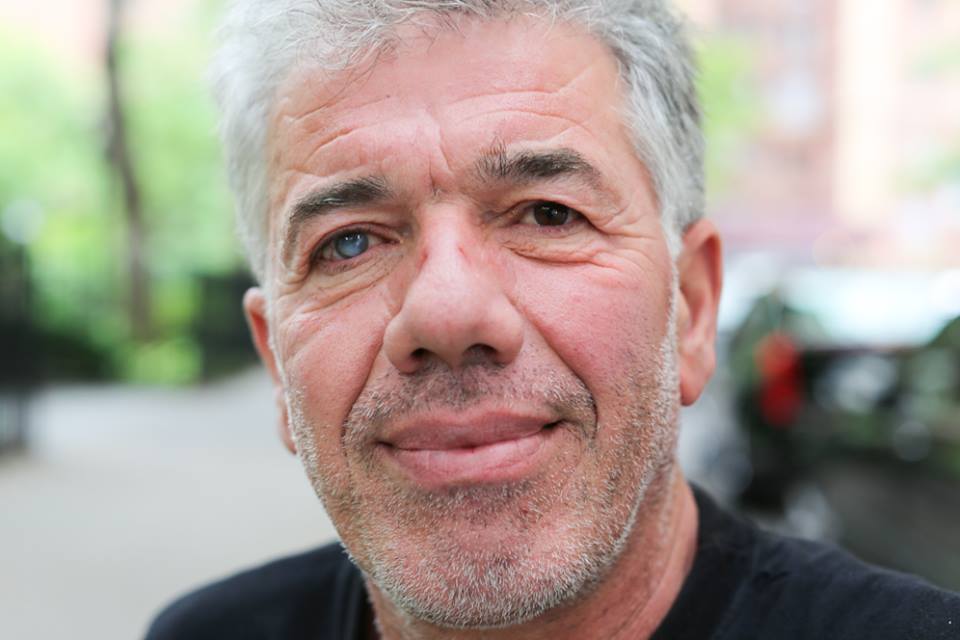
About a week ago me and a man named Ryan Brooks had a thought-provoking conversation on my Facebook wall.  I had just shared my latest blog entry 'The margin of error'. He commented "I always find your posts extremely interesting. I had a bleed in the brain stem which has left me with double vision. This is how I see now."


That is not your every day Facebook comment but I knew the visual phenomenon he was talking about of course. As I'm always open to learning about how other people deal with visual brain problems, I asked him whether he wanted to share more about what happened to him. He was prepared to do so and I am happy for it. Even though our histories are different (developmental vs cerebral incident), we are talking about closely related visual issues and symptoms. Thank you for sharing your incredible story, Ryan!

I present to you, Mr. Ryan Brooks.

Part 1
RYAN: "I am 40 years old. I live in Newcastle NSW, Australia. I was an occupational health and safety manager in the mining industry and traveled the world to places like New Caledonia and New Guinea to name a few. I had only been home for eight weeks when the incident happened. Over a period of three months prior to the bleed I had experienced three separate dizzy spells and racing heart episodes but only lasted for about ten minutes. I attributed it to maybe anxiety due to my stressful job.

The brain bleed happened on the 25th of June, 2012 at 11.15AM, I woke up feeling great and drove down to a cafe on the beach for a coffee. As I walked down the beach to the cafe my vision started to blur and I felt a strange buzzing feeling at the back of my head near the base of the skull. I put it down to still being half asleep. I ordered a coffee and sat at a table outside watching the surf. The buzzing started to get worse. I started to feel like I had butterflies in my stomach and felt increasingly faint. I got up to go to the bathroom to wash my face. As I got to the door... Boom. Suddenly I felt as if pins and needles were penetrating my face. Down my left arm and leg I felt numbness as well as pins and needles. All this combined with a feeling of complete disorientation. I managed to stumble back to the front counter and said "Call an ambulance, I'm having a stroke." Then I passed out over a table. A short while after, I came back to and noticed no one was helping me. I was in a bad way. I remembered there was no phone signal inside so I got on my hands and knees and crawled out the front door. I laid on the path, rang my sister and told her what had happened and for her to call an ambulance. The people at the bar told my sister that they thought I was a drug addict having an overdose. My sister went absolutely ballistic. The ambulance arrived 20 minutes later and off to hospital we went. After some brain scans the doctors realized that I had a bleed in the upper mid brain, which is part of the brain stem. More conspicuously, by merely looking at me, they could see my left eye was turned in so hard towards my nose you could barely see it. "


Ryan and his daughter


 Part 2
"The official diagnosis was a cavernous malformation. In plain English this means that a blood vessel wasn't formed properly at birth and it took 38 years to wear out and rupture. In other words, a ticking time bomb."

MICHAEL: After the incident and the diagnosis, did they do something about that blood vessel?

RYAN: "They did an angiogram and injected ink into my brain which basically gave them a map of all the blood vessels in my brain and of the problematic area of vessels in particular. They didn't do anything because the brain area where it happened is very complex. The vessels in that area of the brain stem are the size of a strand of hair. Fortunately they were not arteries. Doing something to 'fix' it would entail too much risk. An intervention might kill me or give me a major stroke. Instead we opted for yearly brain scans. There's no guarantee it won't happen again."

MICHAEL: How did things proceed from there on out?

RYAN: "After four initial weeks of rehab for partial paralysis down my left side everything started to get back to normal. Sort of... Concerns regarding double vision as a result of the bleed and nerve damage remained.

MICHAEL: Can you describe your current visual situation?

RYAN: "The official definition of the visual dysfunctions caused by the brain bleed goes as follows. Bilateral asymmetrical superior oblique paresis, cranial nerve paresis with convergence retraction nystagmus and some myopia in the left eye. But I would like to try and explain what that really means from my point of view.

From the outside my eye alignment looks normal other than a slight turn of the left eye.  Yet from the inside that's a different story. When I look straight ahead the image of my right eye looks pretty level but the image of my left eye is on a 45 degree vertical angle.The left eye also has very bad torsion.


When I tilt my head up and down the torsion becomes worse.  I have vertical up gaze palsy and so when I try to look up my eyes wiggle. Notwithstanding, when I tilt my head slightly to the right it pulls the torsion nearly square. In that moment my brain relaxes because it almost feels like I have normal and steady binocular vision again. Sadly I can't sustain the binocular posture. It's like a stare and after five seconds my left eye starts to drift.


When I turn my head left and right the images split up and down so I have to patch my left eye. It is very hard after 40 years of normal sight to now have two separate images that 'do what they do'.


When I walk without the left eye covered, the image coming from that eye bounces. So when using my right eye, with my left bad eye covered, the eye's movement compensates for any head movement. The image stays stable and straight (proper Vestibulo-Ocular Reflex). On the other hand, when I close my good right eye and only have to draw on my left eye, the image inadvertently moves up and down following head movement (compromised Vestibulo-Ocular Reflex). Not only does the image move up and down, but it also tilts because of the torsion. It's quite nauseating and throws my balance out. If I walk with only my bad left eye open,  it feels like I'm walking across a very steep hill. The image just bounces around inconsistently.

I have also noticed that the color isn't as good in my good right eye. At night my right good eye doesn't see as well as my left bad eye. Everything is a sort of tinted darker when looking through my right eye.

When I close one eye, my vision feels quite normal. although I had to get used to the difference in depth perception. At night, when there is little light, it feels like my vision is back to normal which stops the headaches. That's the only time my brain isn't fighting to get properly aligned binocular input. Then I can relax.

Considering all the above, using my vision is a very fine balancing act."

MICHAEL: How do you make these example images? Do you use an app?

RYAN: "You are actually the one who inspired me to investigate the internet and thus coming across the apps to help explain what I see to other people. These are the two apps. My Doctor was very impressed with the idea of taking photos of what I see and simulate what I see as I move my head into different directions. The images shift when doing so. This way he can see exactly what I see."


MICHAEL: What kind of treatment have you been getting or participating in?

RYAN: "I have been seeing a strabismus specialist in Melbourne at the Private Eye Clinic by the name of Dr Lional Kowal. I had VT for 12 months. While doing VT I was also going to Melbourne every three months for examinations. The VT pulled my eye nearly back to its normal position but the double vision remained.

After that initial year of VT, I have had five correctional surgeries but none have been successful due to damage to the 3rd, 4th, 6th, 9th and 10th cranial nerve. Every time a surgery was done it had a negative effect on either the vertical or horizontal relative positioning of the images. Unfortunately after five surgeries, two of which were to undo previously performed surgeries which had made my double vision worse, I am back to square one."

MICHAEL: I'm just thinking out loud... You had the incident in June 2012. Then you had one year of Vision Therapy aka Visual Neurorehabilitation. That brings us up to August 2013. So you must have had five surgeries in one year? How did that go? You seemed to be making VT progress, albeit slow. Who proposed the surgery? What did the Doctor tell you about its effectiveness, risks and possible outcomes?

RYAN: "As the double vision wasn't disappearing mainly due to the torsion aspect of my case, the Doctor or Neuro-Ophthalmologist suggested surgery. They explained the risks. He was confident he could give me an improvement.

The first operation was performed on both eyes and made the double vision worse. Five days later that surgery had to be undone.

Another three months later I had more eye muscle surgery on both eyes while being awake using only the use of anesthetic drops. They placed a black letter T on the ceiling and also on the wall in front of me. He started with the left eye. Cutting and manoeuvring the muscle a millimeter at a time. Then he'd wash out the eye, take the eye clamps out and tell me to look at the T and ask if there was any difference. Then he'd sit me up and tell me to look at the T on the wall in front of me and ask whether there was any difference. My response was 'it has adjusted slightly'. So back down for more adjusting. This process went on thee times until he said he couldn't do any more. He stated that if he overstretched the muscle it was irreversible. Next we repeated the same process for the right eye.


It was an extremely stressful experience. I could hear my heart racing. I was boiling hot due to the lights and surgical blankets. To be honest, after you have had your eye ball cut open, the eye muscles cut  and then flushed out with water, the mix of blood and water makes your vision quite blurry. So any indication of what I was seeing was compromised and not really accurate. My eyes kept drifting as my muscles were cut, my vision was blurred and the environment was extremely stressful.

A week later after letting my eyes recover a bit the double vision was worse. Another week later I went in for surgery again in an attempt to undo things. Under total anesthesia this time.

Four months later, one more surgery was done to do some slight tweaking. I was completely under for this one. Whatever the result was, I was going to have to live with it."

MICHAEL: You said 'I am back to square one'. Do you feel the surgeries were just a useless exercise or would you say it deteriorated the situation? I'm asking out of genuine curiosity, not because I myself had a very bad experience with strabismus surgery.

RYAN: "Now it is more or less back to where it was after the brain bleed, although a little different. Looking back I'm glad we gave it a try because now I know that at least we tried. I put my trust in my Doctor and we came out the other side not having gained but not having lost much either. He was a wonderful Doctor and only charged me for the first surgery. All the other surgeries he put through my medical fund at a significant price reduction. That was an incredibly kind gesture and showed that he was more interested in my case than in my money. On top of that I was extremely fortunate to have wonderful friends and family who organized a charity events such as a dinner party, an auction and a golf day. They ended up raising enough money to cover my surgeries, anesthetist, flights, accommodation, check ups, glasses, lenses, ... That all amounted to 30.000 dollars. If they read this, I want to thank Brett & Gail Purcell, Nathan Palmer, Tim & Macushla Spencer, Chad Edwards, Leeanne & Jeremy Symes and many other friends and family members who were involved. I had been 14 months off work so without this bunch of phenomenal friends my treatment would definitely have been cut short. I'm immensely grateful to them all."


Part 3
"Nowadays I'm using a tailor made contact lens that looks normal but really isn't. The outer edges are clear so you can still see the colour of my eye but the area covering my pupil is completely blacked out. I had to have my pupil measured so it looks cohesive with my other eye. This means that I am basically blind in my left eye when I have the lens in. Well, not completely blind... I still get peripheral vision from my left eye as the dot on the lens is a little smaller than my pupil and pupil size is variable depending on light conditions. Therefore, I still wear my glasses.   When I'm not wearing my glasses, I have learnt to ghost the images of my left eye but after a while this gives me head aches. So back on go the glasses! Looking at me you couldn't tell anything is wrong. However, without my blacked out lens and my glasses the double vision still gives me constant headaches. .

In general, my life has changed considerably following my accident. I no longer work in the mining industry. I now work as a disability case manager and spend much more time at home with my beautiful daughter."

Tuesday, September 2, 2014

A wedding without double vision

This weekend I attended a friend's wedding. I enjoyed it immensely. It was a reminder of the fact that not everything in life has to be a struggle. Not everything needs to be difficult. It's nice to see so many happy faces celebrating a joyous occasion.

During the last three years I have gone out of social circulation a bit. This is because I was suffering from all the symptoms you might associate with a severe concussion due to chronically untreated and mistreated strabismus. Social circumstances don't always bend to health and resting needs. It's weird to suddenly need to close your eyes to rest them or have to lie down so I prefer to avoid such situations. It has been hard enough to manage and explain my condition to my in house family. It has often proven challenging not to lose my nerve and get angry at their incomprehension of what is obvious, at least, to me. Certainly when thinking they could have avoided the whole thing by using their own brains. Sometimes Sartre is right. L'enfer, c'est les autres.

I also didn't socialize too often because it doesn't change anything about my peculiar problem, drains my energy and adds to the frustration. I simply have to 'do the time' while not bashing into the walls too much. I have been fairly successful at doing my recovery time without repaying, often unintentional, hurt with hurt. That's the best and most sensible way of doing it. I'm good at restraining myself from doing stupid things.

Still, life goes on.  Everyone else goes on to live their life and you have to start from scratch. While they get to have opportunities, jobs, weddings and babies, I have to teach myself how to read. The wedge has always been there, and I have done a remarkable job of covering it up, but in the end the truth remains. I don't possess the visual motor skills to do even basic reading. High intelligence and impeccable work ethic will only get you so far without those.

Meritocracy is dead. I felt as if whatever I do makes no difference and gets me nowhere in life. No wonder I didn't feel like socializing. I mostly felt furious and alienated. This is why, despite being a sociable person and having lovely friends, I was not always capable of being good company. The last thing I wanted to do is lash out at them for something that isn't their fault. They can't help the fact that they have what I want without even giving it a second thought. They can't help a whole series of ignorant, negligent and blameful people made me squander my youth and are still making me pay for their mistakes. However, irritation is natural when being locked in in your own body. Usually thinking about all this lost time and effort makes me want to throw up. Fortunately I have a good understanding of the situation now and know the only solution for me is to take my losses and build a better visual system.

This weekend I felt differently. It might be because I was able to get through the entire day without running into double vision or insurmountable exhaustion. This made me enjoy the day, the lovely people and the beautiful party. However, I think there's more to it. Even though I'm not exactly aiming for a 'normal' life, it must be nice to be able to function normally. In other words, take your life into your own hands. I think I can eventually attain that freedom. I'll have to work with the delayed time frame but I feel as if there's still hope for me after all. In a recent e-mail conversation with Sue Barry, she told me: "It's amazing how much we were missing visually, but this also gives us the opportunity to keep improving. Although my biggest visual changes occurred when I was in formal therapy in 2002 and 2003, I still strategize with my optometrist a few times a year about new exercises I can practice at home, and my vision continues to improve. I'm 60 years old, and while all my friends are complaining about how they are aging, I'm seeing better. So, there are compensations and -you're right - the best is yet to come."

Being there I could just savor the moment without feeling betrayed by anyone having had 'an easier time' than me. I could be happy for them without thinking about our contrasting lives. I won't have to be a dysfunctional illiterate person without opportunities forever. I too will be okay one day and get out of this mess. Among all those happy people I thought about how far I have already come in recovering the unrecoverable, enjoyed my single vision and smiled. Indeed, the best is yet to come.

Sunday, July 27, 2014

Strabismus, visual field loss and visual-spatial neglect


"Right after I lost vision in my eye, I was so bad at walking that I ran into a girl eating ice cream, and knocked her cone out of her hand. She screamed: ‘Are you blind!?!?’ I turned to her and said: ‘I am blind actually, I’m so sorry, I’ll buy you a new cone.’ And she said: ‘Oh my God! I’m so sorry! Don’t worry! It’s no problem at all! I’ll buy another one.’ So we walked into the ice cream store together, and the clerk said: ‘I heard the whole thing. Ice cream is free.’"

This little charming story by 'Humans of New York' reminded me of the many times I have bumped into people and objects on my left side. For instance, as a kid I was frequently punished for accidently breaking things or 'not behaving'. As a teenager I remember one incident that occurred while I was trying to navigate a busy street. By mistake I bumped into a young woman with my shoulder without bad intentions, immediately apologizing. I quickly left the scene before her Alfa-male boyfriend was ready to punch me. Ha!

On another occasion I quite simply hit the metal detector at the airport with my left side while trying to walk through it. Apparently regulations state that anyone walking onto the detector has to be frisked in any case. Another pleasant left side neglect experience!

Even now, having much less suppression of my left eye, having a wider visual field and being relatively more binocular and bilateral, I frequently bump into objects on my left side. Just yesterday I hit a door post with my shoulder while running into a room. Ouchie.

Fortunately, as it happens, I just read the 'Evaluation and Treatment of Visual Field Loss and Visual-Spatial Neglect' chapter of the book 'Vision Rehabilitation'! Just when I thought I had read all about my life in the Spatial Vision (!) chapter, or at least about what has been missing from it, those vision nerd authors pulled me back in! -------- (Expect a book review, people. Expect it!)

Visual field loss

The most known causes for visual field loss are eye disease (see picture) or damage of some sort to one or both of the eyes. This is the case for the gentleman featured above.


 Often, however, visual field loss can present more subtly on a cortical level. Cortical vision loss can occur developmentally or due to various kinds of brain injury. Whatever the cause of the visual field loss, the symptoms and the suffering associated are similar. Because of the complexity of the brain, cortical vision loss is very personal and presents itself differently in each patient.

This image gives you an idea of how various cortical disturbances can lead to
different types of visual field loss 
Measurements of visual field loss are performed following the quadrant schematic. I’m not going to get into all the possible types of vision loss but it is important to know that various types of visual training, sometimes including the use of prisms, are available to improve visual brain function. Even when it is impossible to recover vision in a certain field, training can systematically improve adaptation by optimizing residual abilities. Relearned environment scanning can avoid future accidents, elevate quality of life and increase independence.

One very interesting aspect about visual field loss is that some patients lose conscious awareness of what is seen in a field due to damage to the primary visual pathway or the visual cortex but can still intercept valuable visual information through unconscious visual processing. This is called blindsight. In case of blind sight a partially blind patient might be able to perform saccading or pointing to an object in the blind field, be able to use information from the blind field to better execute perceptual tasks in the intact field or even be able to ‘guess’ features of an object in the blind field at much higher rates than chance. There is indeed a neurological basis for these peculiar skills. Even more interesting for the cause of vision rehabilitation is that these latent abilities can be trained to eg. improve maneuvering. --- Also check out this video on blindsight

Visual-spatial neglect

Many patients with visual field loss are aware of the fact that they have lost vision in a certain field yet some aren’t. That’s where things get even more tricky. Some patients with visual-spatial neglect are in some sort of ‘denial’ about their missing visual field. It simply doesn’t exist in their mind. People with visual-spatial neglect think they have an accurate representation of their environment and don’t really feel the need to compensate for their visual deficit. This too can present in a number of degrees. There’s personal, peripersonal or extrapersonal neglect. People with personal neglect do not only ignore half of their visual space but also ignore half of their own body image to a greater or lesser extent. Peripersonal neglect indicates the neglect of space within arm’s reach and extrapersonal neglect adds the neglect of space beyond arm’s reach.

The presence of moderate to severe visual-spatial neglect can disrupt a variety of daily activities such as dressing, eating, reading, writing, walking, returning to work, and driving. Patients with left visual-spatial neglect will typically veer to the left when walking or bump their left shoulder on the doorframe. (BINGO) -- Vision Rehabilitation

Since most eye doctors aren’t even capable of detecting or treating any brain based vision dysfunctions which are often literally staring them in the face, it is no surprise visual-spatial neglect often goes undetected. In my case bumping my shoulder and what seem minor mishaps were less worrisome to me than, say, double vision. Nonetheless, many with more severe visual-spatial neglect, but without associated motor deficits, go undiagnosed and untreated following stroke or TBI.

They may be misdiagnosed as having dementia, as family and caretakers are unable to understand why a person might end up with their pants on backward (when they put them on, they only acknowledged one leg, so there was no frontward or backward choice), or why they forget to finish a task or put away tools. It is not always as easy as noticing that they do not finish food on one side of their plate. Patients with visual-spatial neglect are frequently misdiagnosed as having visual field deficits by vision care practitioners who are unaware of the possible diagnosis or visual-spatial neglect. -- Vision Rehabilitation

Indeed, it is not always easy to determine whether a patient has visual field loss, visual-spatial neglect or both! That’s why appropriate testing has to be done in order to get answers to those questions and get appropriate treatment.

Visual field loss and visual-spatial neglect in strabismic and amblyopic patients


As for the connection between strabismus, visual field loss and visual-spatial neglect, it is clear there must be a considerable incidence of neglect among strabismics. Suppression of part of the visual field to deal with misaligned eyes can be seen as self-induced visual field loss. This suppression of one of the eyes, be it permanently or alternately, leads to a reduced field of vision. In my case it is no surprise I bump into doors with my left shoulder as my left eye was traditionally the ‘lazy’ one. Even now with a field of vision that is as binocular as ever, I still tend to suppress peripheral vision coming from my left eye in more stressful situations requiring focus. Clearly this also affects my body image as I seem to be less likely to take into account the existence of my left side while moving.

The most common location for the lesion causing left spatial inattention is thought to be the right parietal lobe. In most patients, corresponding lesion to the left parietal lobe causes mild or transient visual-spatial neglect of the right space. It has been hypothesized that the right hemisphere modulates attention to both hemi-fields, where the left hemisphere modulates attention mainly to the right hemi-field only. Thus, damage to the left parietal lobe may cause an imbalance in allocation of attention from the pre-injury state, but damage to the right parietal lobe, common in middle cerebral artery infarct or aneurysm, causes marked visual-spatial neglect, as this is the major cortical substrate for orienting and allocating selective attention to the left hemifield. (!) In very young children, this hemispheric dominance for spatial attention is not yet fully developed (!) as evidenced by line-bisection tasks at age 4-5 years (!). Children show adult-like bisection with a slight leftward bias in bisection by 7-8 years of age. -- Vision Rehabilitation

That solves the mystery then. At the age of three my bispherical development went array and I developed amblyopia, strabismus and visual-spatial neglect. In addition to the distorted body map and frequently missing visual fields, unreliable alignment of the visual axes produces conflicting input to answer the basic ‘where am I?’ and ‘where is it?’ questions. Answering those two questions are the two primary objectives of the visual system preceding the ‘What is it?’ and the ‘What to do about it?’ questions. In developmental strabismus, neglect might in fact be a way of dealing with these conflicting inputs. To resolve the conflict one side has to foot the bill. That’s why, at this point in my rehabilitation, I am putting a lot of emphasis on not only aligning the eyes but also paying attention to my entire visual field and doing activities that promote bilateralism. Again it seems to come down to the magic three: the integration of visual input, vestibular input (balance) and proprioceptive input (self awareness and body image).

I'll try to be more practical about what I actually DO to integrate those types of sensory input next time. :)


Wednesday, May 28, 2014

Session 72: In pursuit of more speed, accuracy and consistency

The foundation has been put in place. Finishing it up by perfecting the collaboration between vergence (eye movements) and accommodation (manipulation of the eye lens by your tiny muscles in the eye) and increasing capacity will be the closing deal. Major physical restrictions have been largely eliminated. More speed, more accuracy and more endurance. These will be the stakes as I move towards normal functionality. The time that I could not even participate in certain training activities has passed. Finally most activities are accessible and progress will, rather than being merely damage control and laying foundations, start to improve daily function and influence the way I can interact with my environment. Things are about to get extroverted instead of introverted.

“When vision is working well, it guides and leads; when it is not, it interferes.” - John Streff

The coming year we will go over that speed bump and make my vision guide and lead rather than interfere with my behavior. Right now my vision deficits still monopolize my life but I can feel and imagine how it will be as I gradually break through that 'visual firewall'.

Not only are all exercises accessible now but I'm making tangible, numerical progress at them and we can compare it to 'the standard values'. Before I also made numerical and tangible progress but it was still so subpar it sometimes seemed a Pyrrhic victory. At this time, I have entered the charts approaching normal function. This is totally new and makes it more fun. It's a game, not a tragedy. Three years and five months into the game I feel as optimistic as ever. Everything indicates a successful outcome and things keep moving into the right direction. When (eye) muscle tone, visual input and sense of balance will be synced up, I'm in for a major brain fart.

When testing my abilities on the biopter, both divergence and convergence, I could successfully execute up to slide 5 (out of 8), whereas last year I'd be stuck at slide 3. Well, pre-VT I'd be stuck at slide zero. :D

When playing with the vectograms today, which are supposed to bring out stereopsis if you already possess that skill, I was asked to 'grasp' the portrayed characters. If percieved correctly with the polarized glasses they would be floating midair. I don't see them floating at differing distances but when grasping for them my arm movement apparently more or less reflected the appropriate distance, or at least the right hierarchy.


*Spoiler alert* The king was closest, the monopoly guy furthest and the girl in between in terms of 3D distance, if I'm not mistaken. So there's that intuitive feeling telling me something based on my vergence movements I suspect. They are still too sloppy to be good, but we'll deal with that over the next year. Can't wait to put the cherry on that visual cake. I've been told Americans put cherries on everything. On top, on cakes, on your lips, in the fridge... Wherever you put it, I'll put it there.


Next time: "Standing on your head, yoked prisms and prism flippers".