Wednesday, September 24, 2014

The margin of error

Interestingly, my strabismus was developmental since the age of three but in a relatively short amount of time I lost many of my adaptations (suppression, strabismic ways of eye teaming) to cope with misalignment of the eyes. First my suppression gradually declined because of life style, i.e. overly zealous studying, and then the way my eyes moved and alternated was abruptly changed through eye muscle surgery. This left me without any reliable adaptation to deal with my abnormally developed visual system.

So the only option then, is pick up the pieces and start all over again. My visual system seems to act as a binocular system that was disrupted rather than a visual system which developed strabismically. It has no real inclination, or possibility for that matter, to go back to monocular viewing, alternation or any of its other former ways. There's a strong incentive to use both eyes, and it's constantly trying to do so, with varying rates of success. It's a binocular system whose inability to move its eyes accurately is cramping its style. Because of its poor handling, my case more resembles strabismus which was acquired later in life through brain injury than that of a developmental strabismic equipped with coping tools safeguarding functionality.
The level of spasticity or lack of control when it comes to eye movement is fortunately declining. It has been declining for some years and every improvement is a win. As can be seen in previous video posts, it's getting harder to spot there is any problem at all! However, automation is the goal, not merely the ability to execute the movements using disproportionate amounts of attention and energy resources.

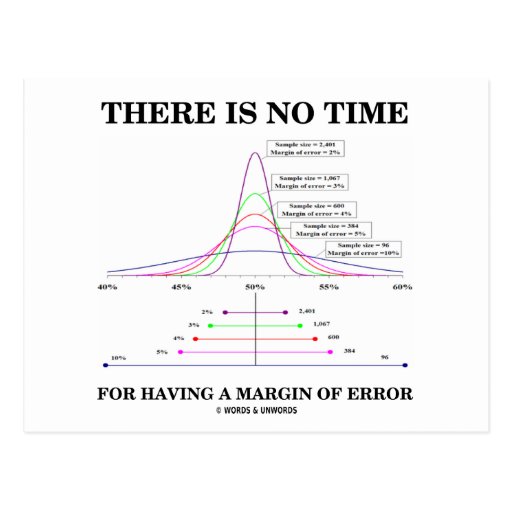
Despite already increased accuracy and speed, there is still a considerable margin of error when it comes to my eye movements. I can not entirely rely on solid binocularity yet. It's either right or not right, and if it's not right you need to waste extra energy on correction which could have been used for observation and interpretation of visual input. Another issue associated with the continual trial and error, and the exertion it requires, is the build up of tension. Because of the lack of eye muscle control, surrounding areas of my body (face, jaw and gradually the entire body) start to tense up. The efforts to keep my left eye in check and attempts to keep up binocular performance will often result in jaw cramps on the left side and headaches. In order to avoid such an escalation it's recommended to allow for a margin of error and try to cut the visual system some slack.

What activities allow for a margin of error?

Reading vs General Navigation

Given this larger than normal margin of error, I prefer to avoid situations which require specific eye behavior.and do not leave much room for error. An obvious example of such an activity that requires precise and infallible eye movements is reading. There's a number of different ways to read but they all require impeccable eye movement control. That's why reading with audio back-up is much more agreeable with me. There's more room for eye movement error that way.

In contrast, the general observation of a road, square or real life situation can be done using an endless variety of eye behaviors. Some are definitely more effective than others but you can still get around.  For someone whose eye behaviors start looking deceptively normal such activities requiring an accuracy level of 'approximate' are starting to be fine. It's starting to get less overwhelming, less out of control. More ocular control will be very welcome over the upcoming year(s) but it's already quite manageable.

Driving is actually easier than walking or running because my body and head stay more or less in position, especially on a highway. Because the road and the mirrors are much larger than the words on a page while reading, and driving is less cognitively taxing, my current level of eye control is okay for driving. In fact, driving is pretty calming as it allows for staring and the use of peripheral vision.

Individuals vs Groups

The difference between reading, general viewing of scenes and driving is pretty straight forward. Here's something which might be more unexpected, or maybe not. Perhaps people without eye muscle palsy experience this difference too. Meeting with one person is a lot more taxing to my visual system than meeting with a bunch of people. I don't look strabismic anymore so it's not about  appearance. Meeting with one person just doesn't allow for much of an error margin when it comes to eye behavior. When talking to someone you have to look at that person. That's specific. It's likely you will have to hold your gaze steady but every once in a while you have to look away. The social situation dictates your eye behavior and your eye muscle control system better be up to the task. Most people I know and enter in contact with are aware of my vision issues and if I do act a little more peculiar than normal and start staring in the distance, I just explain. No biggy. Nonetheless, I try to keep up the eye contact dance. After all, it's good practice! It's also an important means of communication but you need the physical eye fitness to do it. 

When meeting up with larger groups, there is more room for errors in eye movement. You can just listen to the conversation and stare randomly every so often. Attention is divided and you don't always have to look at the person who's doing the talking. It clearly also depends on how familiar you are with the group. An entirely new group in an new environment is a probable overload. I will have trouble moving my eyes to explore and keep up with the new situation, people and environment, especially over extended periods of time. Not much room for eye movement errors in that case because you'll preferably need your brain to deal with the situation rather than an eye movement deficiency. You're losing attention to something that should be working automatically.

Factors that decrease the margin of error

Short term

When I'm going to do something relatively visually taxing, which includes many daily activities in varying degrees, you want to have me well fed and well rested.

I burn calories like you wouldn't believe and when I get hungry my accuracy diminishes and errors occur more frequently. So I'm eating a lot of the time these days as my appetite returned after a couple of very stressful years. This has a double benefit. It more or less keeps up my visual performance in the short run and makes me look less emaciated in the long run.

Naps seriously improve my vision. Even an half an hour nap will seriously improve my visual performance for the night. Don't be a hero, take naps.

Basically I'm just a baby learning how to see. Now we know why they too eat and sleep all the time.

Long term

Current practice consists of finding ways to allow a margin of error while slowly crushing that same margin as time goes by. Sometimes it is not possible to avoid situations that are too visually stressful. Then I do have to hurt myself by pushing it too far, resulting in tension and headaches. But by minimizing the time I exceed my limit and by granting the visual system relative rest, the comfort zone slowly expands.

Eye control and eye alignment should be invariable but is, in my case, all to often variable. Invariable and reliable eye movement control is a great advantage when executing bottom-up visual processing (taking in new visual scenes and observing them) and top-down visual processing (combining stored memories with what is seen). Virtually any human activity employs these kinds of visual processing. Therefore, I'm very curious about the dormant potential that might be uncovered as the rate of movement errors further declines. Stereo vision, for one.   If I ever want to live a 'normal', independent life, there's no other way but to keep working on accuracy, speed and stability of eye movement.


Eye movement control and the use of glasses for hyperopes

It's still frail and not ready to be stress tested, but it's happening. As my gaze gets steadier and the margin of movement errors declines, there is less need for my glasses. As vergence gets easier, I can focus more on the accommodation aspects of visual training. Seamless interaction and collaboration of vergence and accommodation is crucial to obtain a lasting end result in VT. As I'm farsighted (+2.5 in each eye) this evolution could have been expected. The glasses are more a way of avoiding fatigue and thus gaze instability than a way of providing better visual acuity. In fact, I often have to look over them to read things far away. As gaze stability is maturing I actually see better in daily life without the glasses. Ultimately they will just be reading glasses for near point work. Sometimes it even has a calming effect to take them off, even refreshing in a way. I'm still wearing them daily but every so often I let my visual system have a go on its own. Even though my glasses are rimless, it feels different not to wear them. I can believe people have an easier time seeing 3D without glasses or with contact lenses. Glasses have a way of distorting light and possibly binocular vision. However, I'm not going in heals over head... They are a useful anti-fatigue tool while I acquire more eye movement control. 

Friday, September 12, 2014

Some vision testing in front of the webcam

Inspired by Dr. Charles Boulet's article on the Cover Test, I myself felt like doing some testing in front of the webcam.


First you can see me doing some saccades, or jumping movements, going from one corner of my laptop screen to the other. I started off quite well but then my left eye started lagging and had trouble keeping up. This resulted in some double vision when looking at the right. I slowed down and paid more attention to remedy the problem. In order to reduce 'slippage' my left eye needs to improve its quickness of reaction and accuracy. This will be a key factor in acquiring stereo vision and reliable reading skills.

During the cover test my gaze seems pretty solid. In hindsight, I realize that I should have covered each eye for a longer period of time to see whether it would stay in place. Still, not a bad result in view of where I came from.


In this video I am testing my ocular movement ranges. This slow tracking of the object seems mighty fine. I still feel some strain on particular eye muscles and have to stretch them to the limit but the video looks nearly perfect. There are no obvious restrictions in movement anymore.

I must say it makes me very happy to watch myself performing so well on these basic tests. From the outside I almost look 'normal'. There's no way in hell the untrained eye could tell I've had manifest strabismus for the larger part of my life.

Not a hierarchy of visual skills but a proposed aid for vision testing sequence

Hence I have definitely graduated to the 'Convergence Insufficiency class'. I still have trouble reading, problems with fatigue and trouble keeping up consistent performance (especially while moving) which are common symptoms in 'milder' forms of binocular vision issues. 'Milder' binocular vision issues are still a pain in the ass...  Nonetheless, when talking about convergence insufficiency I often heard professionals say it can be  treated successfully in less than a year. God, I so hope that's true!

As we get closer to a resolution, it is only natural my strabismus became less visible from the outside and more visual change will happen on the inside. That idea is so exciting. The idea of effortlessly pointing your eyes and just being able to focus on what is seen. Can't wait!

Related articles:
- You want more evidence? I'll give you some evidence right here.

Tuesday, September 2, 2014

A wedding without double vision

This weekend I attended a friend's wedding. I enjoyed it immensely. It was a reminder of the fact that not everything in life has to be a struggle. Not everything needs to be difficult. It's nice to see so many happy faces celebrating a joyous occasion.

During the last three years I have gone out of social circulation a bit. This is because I was suffering from all the symptoms you might associate with a severe concussion due to chronically untreated and mistreated strabismus. Social circumstances don't always bend to health and resting needs. It's weird to suddenly need to close your eyes to rest them or have to lie down so I prefer to avoid such situations. It has been hard enough to manage and explain my condition to my in house family. It has often proven challenging not to lose my nerve and get angry at their incomprehension of what is obvious, at least, to me. Certainly when thinking they could have avoided the whole thing by using their own brains. Sometimes Sartre is right. L'enfer, c'est les autres.

I also didn't socialize too often because it doesn't change anything about my peculiar problem, drains my energy and adds to the frustration. I simply have to 'do the time' while not bashing into the walls too much. I have been fairly successful at doing my recovery time without repaying, often unintentional, hurt with hurt. That's the best and most sensible way of doing it. I'm good at restraining myself from doing stupid things.

Still, life goes on.  Everyone else goes on to live their life and you have to start from scratch. While they get to have opportunities, jobs, weddings and babies, I have to teach myself how to read. The wedge has always been there, and I have done a remarkable job of covering it up, but in the end the truth remains. I don't possess the visual motor skills to do even basic reading. High intelligence and impeccable work ethic will only get you so far without those.

Meritocracy is dead. I felt as if whatever I do makes no difference and gets me nowhere in life. No wonder I didn't feel like socializing. I mostly felt furious and alienated. This is why, despite being a sociable person and having lovely friends, I was not always capable of being good company. The last thing I wanted to do is lash out at them for something that isn't their fault. They can't help the fact that they have what I want without even giving it a second thought. They can't help a whole series of ignorant, negligent and blameful people made me squander my youth and are still making me pay for their mistakes. However, irritation is natural when being locked in in your own body. Usually thinking about all this lost time and effort makes me want to throw up. Fortunately I have a good understanding of the situation now and know the only solution for me is to take my losses and build a better visual system.

This weekend I felt differently. It might be because I was able to get through the entire day without running into double vision or insurmountable exhaustion. This made me enjoy the day, the lovely people and the beautiful party. However, I think there's more to it. Even though I'm not exactly aiming for a 'normal' life, it must be nice to be able to function normally. In other words, take your life into your own hands. I think I can eventually attain that freedom. I'll have to work with the delayed time frame but I feel as if there's still hope for me after all. In a recent e-mail conversation with Sue Barry, she told me: "It's amazing how much we were missing visually, but this also gives us the opportunity to keep improving. Although my biggest visual changes occurred when I was in formal therapy in 2002 and 2003, I still strategize with my optometrist a few times a year about new exercises I can practice at home, and my vision continues to improve. I'm 60 years old, and while all my friends are complaining about how they are aging, I'm seeing better. So, there are compensations and -you're right - the best is yet to come."

Being there I could just savor the moment without feeling betrayed by anyone having had 'an easier time' than me. I could be happy for them without thinking about our contrasting lives. I won't have to be a dysfunctional illiterate person without opportunities forever. I too will be okay one day and get out of this mess. Among all those happy people I thought about how far I have already come in recovering the unrecoverable, enjoyed my single vision and smiled. Indeed, the best is yet to come.

Wednesday, August 13, 2014

Session 76: Bring in the periphery

Skills acquired so far
- Smooth eye movements, improved vergence amplitudes and eye alignment
- Improved accommodation amplitudes and continuing improvement with flippers
- Stabilizing Vestibulo-Ocular Reflex
- Being able to judge depth using physiological diplopia and reference cue

Left to do:
- Automation and stamina
- Integration, integration, integration.
- My VT seems to be expecting I'll see some float in the Vectograms rather soon. To accomplish this I have to widen the span of my visual field.  That's hard for me. Most of my life I've been busy suppressing my peripheral vision as an adaptation to strabismus. When I try to include more objects into my field of attention my gaze tends to get unsteady. This happens because my limited attention resource partly shifts from eye alignment to the widening of visual intake. That will be the next hurdle to take. "Bring in the periphery!" as my Italian friend Llaria likes to say.

Nice list of acquired skills though. What a journey it has already been over the last three and a half years... Every summer things look different. I'll keep inching forward and by next summer we'll have some good and honest 'float'. Ha!

Thursday, August 7, 2014

Some of my current home based VT activities

Everything we do or don't do has neurological consequences. That's why everything we do or don't do matters.

It's important to note that these activities are not suitable for every VT patient. Nor are they suitable at any stage in the rehabilitation process. They are suitable for me because my ability to control my eyes has reached a level allowing me to handle these activities without imploding, albeit with appropriate rest. Getting to this stage has taken a long time. I've had to do a lot of boring ground work first. Expanding the range of ocular movements, improving saccades, tracking and so on. VT is an active form of patience.

Another important reason of why these activities are appropriate for me as a VT patient is that my central suppression, especially while moving, is very poor. This means there is a very strong incentive for me to use both eyes and align them, rather than trying to suppress one eye. That's a very important point. Taking that into consideration, this means that I'm ALWAYS doing VT. I'm always trying to align my eyes and see binocularly because there's no alternative as there would be in a strabismic with good suppression. That's exhausting, particularly when trying to get out of an initial post-surgery double vision situation. Yet this might have some advantages at a later VT stage.

So what do I do outside the VT office?

1. Bar reading or, when more tired, listening to a text with TextAloud while tracking the words with my eyes. Even without suppression controls, I know when I'm doing it right when the text doesn't go double. The audio support while reading brings some relieve to my vision while still being able to practice saccades and integrate vision, audio and reading comprehension. Over time I feel like the saccades become easier and the audio support is less necessary. I'm gradually inserting prism and spherical flippers into the process to keep it challenging. So far however, (bar) reading hasn't been particularly easy yet.

2. Wearing a translucent filter on my glasses in order to stimulate my left eye and the neurology behind it. I do it in the morning when I'm relatively crisp. Initially doing this was a serious source of energy drainage. The filter in front of the 'good eye' makes the 'lazy' eye work harder in terms of acuity. It also forces me to acquire more dexterity relying on the more impaired eye. Lastly, there's a higher tendency for my eyes to go EXO with the filter requiring more of an alignment effort. To sum up: it works on acuity, eye motility and general integration of the eye into the nervous system.


3. When having to rest, meaning I just want to stare, I sometimes watch some kind of series or movie. When I'm up for it I use the flippers while watching. It's less tiresome than using them while reading because the eyes are more stationary. In fact, the spherical flippers help to relax my eyes when they are all tensed up. It's like stretching soar muscles.
When watching I also like to put a finger (or a remote) in front of my face. If I see two of them I am sure I'm not suppressing part of the view. (physiological diplopia)

4. Head turns. My Vestibulo-Ocular Reflex hasn't been working properly for a long time. This means that when my head moved, my eyes didn't make the appropriate compensatory movements to maintain a stable world view. This year (my 4th VT year) this has finally been leveling out and my eyes do make the appropriate movements for the world to stay fixed and stable. This new and highly anticipated skill isn't entirely reliable as it often gives way when I get tired. That's why I often check up on it and train it for short intervals by making head turns. My VOR needs further refinement, integration and staying power.

5. Anaglyphs: I play with these cards or other anaglyph visuals when I feel like it. Lately it's more fun because I can figure out the DEPTH in them by using my hand and physiological diplopia as a reference. It helps the learning process of corelating eye posture, image disparity and distance. The needed information is being picked up by my brain but I need to further automate these inferences. In the VT office we also use vectograms.


6. Lately I'm playing a lot of football (soccer), sometimes with the translucent filter in front of my left eye. Movement is good. Interaction with the environment is good. Messing around with a football is good visio-motor exercise. When my eyes stop aligning because of fatigue I notice two footballs and know it's time to call it a day.  It's important not only to get both eyes working together but also to integrate them into a moving body. I put special emphasis on using both feet and both sides of my body, mixing it up and trying to stay aware of the entire visual field and physiological diplopia. Football may not be for everyone but I have some very fond memories of playing football as a child so I try to tap into that. Positive emotions and enthusiasm are very important in terms of motivation and creating new pathways in the brain. 

7. Recently I had ten days of access to a trampoline. You'd think it doesn't really make that much of a difference but it does. When getting off the trampoline the world feels like it's moving beneath your feet. It's similar to disembarking a boat. Trampolines are great to further load and consolidate visio-motor and vestibulo-ocular skills. If that gets easy, you can further load the exercise with cognitive processing. Have a look at this cool exercise: http://www.oepf.org/sites/default/files/journals/jbo-volume-21-issue-3/21-3%20Slotnick.pdf 

8. Yoked prisms. These powerful prisms, used with bases to one side, shift your entire visual field to the direction of your choice. The lenses are adjustable. I use them bases up, down, left and right. By doing so I train internal adjustment to new visual circumstances. More specifically they stress test the brain's ability to ajust its egocentric localization, eye and body posture as well as sense of balance and spatial vision.  I have found them very useful in terms of aligning my subjectively perceived and objective midline which is often an issue in strabismus patients. Be careful with these toys though. Don't use them for more than 10 minutes at a time or you might suddenly get licked. They are effective but exhausting. I don't use them every day either. That said, I've had my most 'unusual' visual experiences after using yoked prisms.


9. Deck of cards exercise. It's similar to the 'classic' accommodative rock exercise. Get yourself two decks of cards. Tape one on the window, hold one in your hand and start scanning the window looking for corresponding cards. Emphasize accuracy, binocularity and physiological diplopia. Do it well rather than fast.


10. Taking walks. As for integration of the eyes into the body walking is perfect. Fast is easy, slow is hard. Running is not bad either but you might be paying less attention to the visuals and wasting a lot of energy that could be used for visual consolidation. Vision first, running later. That's how I see it. While walking, take care of your visual experience: eye alignment, physiological diplopia and just being aware of your body and the view. Don't just go walking around dull-minded with ear-buds. 

11. Being aware of my left side and using my left hand sometimes. As my left eye is my amblyopic eye, my right brain hemisphere needs fitness. This is almost surely a gross oversimplification but nonetheless trying to become more bilateral is part of becoming more binocular. Eg. if there's no time pressure I try to use my left hand. My mother told me that before I developed strabismus and amblyopia due to undetected farsightedness at age three, it was very hard for my kindergarden teachers or herself to tell whether I was left or right handed. I was just using either one. Then when I became strabismic the right side heavily dominated things visually and motorically. The chauvinist left hemisphere started hindering the development of my right hemisphere, visually and otherwise. Apparently, as I'm recovering, this is somewhat being reversed. Sometimes when I'm bored I doodle. Yesterday I was doodling with my left hand and noticed I could draw reasonably well with my left hand too. This is new!

Left hand drawing

12. Thump-Pinky Vergence Rock. An exercise similar to the Brock String. The best thing about this exercise is that it works on the integration of visual and proprioceptive input. This is often a decisive factor in getting ahead.  


13. Doing somersaults with my eyes open until I get dizzy. Usually three. That's another Vestibulo-Ocular Reflex integration exercise.

Obviously these activities are not exhaustive. There are many ways to combine and load activities according to your current level. I also don't do all of them every day. Rather, I try to make whatever I'm doing into a visual exercise. If you have some idea how a healthy visual system is supposed to work, you can aspire to that goal.  Just as important as what you do, is how you do it. In the end, life is just one big visual exercise!

Aside from exercising, I'm also eating a lot. It appears that I have already reached one of the goals I set for next year. In two to three months I've gained 6 kilograms bringing me up to 75kgs. This takes my BMI (height=1,85m) from 19.9 to 21.9.  I'd been trying to gain weight for a long time but I guess I'm finally calm enough for it to stick.
I'm mentally preparing myself for the fact that eliminating the residual Convergence Insufficiency and other visual instabilities up to a workable level will likely take another year to year and a half. With some luck and steady work I'll be an 80kg binocular machine by next year. That reminds me... I need to go eat something!

Sunday, July 27, 2014

Strabismus, visual field loss and visual-spatial neglect


"Right after I lost vision in my eye, I was so bad at walking that I ran into a girl eating ice cream, and knocked her cone out of her hand. She screamed: ‘Are you blind!?!?’ I turned to her and said: ‘I am blind actually, I’m so sorry, I’ll buy you a new cone.’ And she said: ‘Oh my God! I’m so sorry! Don’t worry! It’s no problem at all! I’ll buy another one.’ So we walked into the ice cream store together, and the clerk said: ‘I heard the whole thing. Ice cream is free.’"

This little charming story by 'Humans of New York' reminded me of the many times I have bumped into people and objects on my left side. For instance, as a kid I was frequently punished for accidently breaking things or 'not behaving'. As a teenager I remember one incident that occurred while I was trying to navigate a busy street. By mistake I bumped into a young woman with my shoulder without bad intentions, immediately apologizing. I quickly left the scene before her Alfa-male boyfriend was ready to punch me. Ha!

On another occasion I quite simply hit the metal detector at the airport with my left side while trying to walk through it. Apparently regulations state that anyone walking onto the detector has to be frisked in any case. Another pleasant left side neglect experience!

Even now, having much less suppression of my left eye, having a wider visual field and being relatively more binocular and bilateral, I frequently bump into objects on my left side. Just yesterday I hit a door post with my shoulder while running into a room. Ouchie.

Fortunately, as it happens, I just read the 'Evaluation and Treatment of Visual Field Loss and Visual-Spatial Neglect' chapter of the book 'Vision Rehabilitation'! Just when I thought I had read all about my life in the Spatial Vision (!) chapter, or at least about what has been missing from it, those vision nerd authors pulled me back in! -------- (Expect a book review, people. Expect it!)

Visual field loss

The most known causes for visual field loss are eye disease (see picture) or damage of some sort to one or both of the eyes. This is the case for the gentleman featured above.


 Often, however, visual field loss can present more subtly on a cortical level. Cortical vision loss can occur developmentally or due to various kinds of brain injury. Whatever the cause of the visual field loss, the symptoms and the suffering associated are similar. Because of the complexity of the brain, cortical vision loss is very personal and presents itself differently in each patient.

This image gives you an idea of how various cortical disturbances can lead to
different types of visual field loss 
Measurements of visual field loss are performed following the quadrant schematic. I’m not going to get into all the possible types of vision loss but it is important to know that various types of visual training, sometimes including the use of prisms, are available to improve visual brain function. Even when it is impossible to recover vision in a certain field, training can systematically improve adaptation by optimizing residual abilities. Relearned environment scanning can avoid future accidents, elevate quality of life and increase independence.

One very interesting aspect about visual field loss is that some patients lose conscious awareness of what is seen in a field due to damage to the primary visual pathway or the visual cortex but can still intercept valuable visual information through unconscious visual processing. This is called blindsight. In case of blind sight a partially blind patient might be able to perform saccading or pointing to an object in the blind field, be able to use information from the blind field to better execute perceptual tasks in the intact field or even be able to ‘guess’ features of an object in the blind field at much higher rates than chance. There is indeed a neurological basis for these peculiar skills. Even more interesting for the cause of vision rehabilitation is that these latent abilities can be trained to eg. improve maneuvering. --- Also check out this video on blindsight

Visual-spatial neglect

Many patients with visual field loss are aware of the fact that they have lost vision in a certain field yet some aren’t. That’s where things get even more tricky. Some patients with visual-spatial neglect are in some sort of ‘denial’ about their missing visual field. It simply doesn’t exist in their mind. People with visual-spatial neglect think they have an accurate representation of their environment and don’t really feel the need to compensate for their visual deficit. This too can present in a number of degrees. There’s personal, peripersonal or extrapersonal neglect. People with personal neglect do not only ignore half of their visual space but also ignore half of their own body image to a greater or lesser extent. Peripersonal neglect indicates the neglect of space within arm’s reach and extrapersonal neglect adds the neglect of space beyond arm’s reach.

The presence of moderate to severe visual-spatial neglect can disrupt a variety of daily activities such as dressing, eating, reading, writing, walking, returning to work, and driving. Patients with left visual-spatial neglect will typically veer to the left when walking or bump their left shoulder on the doorframe. (BINGO) -- Vision Rehabilitation

Since most eye doctors aren’t even capable of detecting or treating any brain based vision dysfunctions which are often literally staring them in the face, it is no surprise visual-spatial neglect often goes undetected. In my case bumping my shoulder and what seem minor mishaps were less worrisome to me than, say, double vision. Nonetheless, many with more severe visual-spatial neglect, but without associated motor deficits, go undiagnosed and untreated following stroke or TBI.

They may be misdiagnosed as having dementia, as family and caretakers are unable to understand why a person might end up with their pants on backward (when they put them on, they only acknowledged one leg, so there was no frontward or backward choice), or why they forget to finish a task or put away tools. It is not always as easy as noticing that they do not finish food on one side of their plate. Patients with visual-spatial neglect are frequently misdiagnosed as having visual field deficits by vision care practitioners who are unaware of the possible diagnosis or visual-spatial neglect. -- Vision Rehabilitation

Indeed, it is not always easy to determine whether a patient has visual field loss, visual-spatial neglect or both! That’s why appropriate testing has to be done in order to get answers to those questions and get appropriate treatment.

Visual field loss and visual-spatial neglect in strabismic and amblyopic patients


As for the connection between strabismus, visual field loss and visual-spatial neglect, it is clear there must be a considerable incidence of neglect among strabismics. Suppression of part of the visual field to deal with misaligned eyes can be seen as self-induced visual field loss. This suppression of one of the eyes, be it permanently or alternately, leads to a reduced field of vision. In my case it is no surprise I bump into doors with my left shoulder as my left eye was traditionally the ‘lazy’ one. Even now with a field of vision that is as binocular as ever, I still tend to suppress peripheral vision coming from my left eye in more stressful situations requiring focus. Clearly this also affects my body image as I seem to be less likely to take into account the existence of my left side while moving.

The most common location for the lesion causing left spatial inattention is thought to be the right parietal lobe. In most patients, corresponding lesion to the left parietal lobe causes mild or transient visual-spatial neglect of the right space. It has been hypothesized that the right hemisphere modulates attention to both hemi-fields, where the left hemisphere modulates attention mainly to the right hemi-field only. Thus, damage to the left parietal lobe may cause an imbalance in allocation of attention from the pre-injury state, but damage to the right parietal lobe, common in middle cerebral artery infarct or aneurysm, causes marked visual-spatial neglect, as this is the major cortical substrate for orienting and allocating selective attention to the left hemifield. (!) In very young children, this hemispheric dominance for spatial attention is not yet fully developed (!) as evidenced by line-bisection tasks at age 4-5 years (!). Children show adult-like bisection with a slight leftward bias in bisection by 7-8 years of age. -- Vision Rehabilitation

That solves the mystery then. At the age of three my bispherical development went array and I developed amblyopia, strabismus and visual-spatial neglect. In addition to the distorted body map and frequently missing visual fields, unreliable alignment of the visual axes produces conflicting input to answer the basic ‘where am I?’ and ‘where is it?’ questions. Answering those two questions are the two primary objectives of the visual system preceding the ‘What is it?’ and the ‘What to do about it?’ questions. In developmental strabismus, neglect might in fact be a way of dealing with these conflicting inputs. To resolve the conflict one side has to foot the bill. That’s why, at this point in my rehabilitation, I am putting a lot of emphasis on not only aligning the eyes but also paying attention to my entire visual field and doing activities that promote bilateralism. Again it seems to come down to the magic three: the integration of visual input, vestibular input (balance) and proprioceptive input (self awareness and body image).

I'll try to be more practical about what I actually DO to integrate those types of sensory input next time. :)


Friday, July 11, 2014

Session 75: Trusting yourself

I had another training session on Tuesday. I did more 'feeling depth' in anaglyph pictures by reaching out for them with my fingers. It's very exciting how that keeps working. This practice also enhances physiological diplopia. That makes sense given that this ability is based on positioning your eyes correctly, seeing the object of interest single and everything after it double. When my hand is singled out and the object of interest is singled out, that's where it should theoretically be in space. It isn't really, because it's just an anaglyph stereogram of course. That sounds pretty obvious but it wasn't when I first started doing this exercise. It takes accuracy.


I'm so astonished by the fact that this is starting to work out for me. My training optometrist/vision therapist Sofie (as opposed to the supervising optometrist who does the check-ups) said: "Yeah, just trust yourself. That's how it should be." After all these years of double vision, it's hard to trust my vision. The illusion of seeing is believing is gone. It feels like it was all just one crazy conspiracy designed to screw with me. So I guess trusting myself would be a good start. In this spirit, my brain is finally starting to interpret the normal alignment of the visual axes. Sweet.

Of the supervising optometrist I already knew from the very first meeting he thought my case was hopeless and I should not even start training, but Sofie had never said this with so many words.  She'd always been patient. For the first time she now admitted: "I never thought you would ever get to this stage of correctly interpreting stereograms by reaching out for them." There's always been progress but this new feat is very outspoken. It's added functionality and that is what we have been laying the groundwork for all along. I like it. It's like the first time you used WiFi. It's awesome and incredible, yet it's 'normal'.

Earlier, when listening to the book 'Phantoms in the Brain', I was struck by an anecdote very similar or related to using fingers to sense depth and develop binocular depth perception.

"... Many stroke patients, like Bill, with dyscalculia also have an associated brain disorder called finger agnosia: They can no longer name which finger the neurologist is pointing to or touching. Is it a complete coincidence that both arithmetic operations and finger naming occupy adjacent brain regions, or does it have something to do with the fact that we all learn to count by using our fingers in early childhood? The observation that in some of these patients one function can be retained (naming fingers ) while the other ( adding and subtracting) is gone doesn't negate the argument that these two might be closely linked and occupy the same anatomical niche in the brain. It's possible , for instance, that the two functions are laid down in close proximity and were dependent on each other during the learning phase, but in the adult each function can survive without the other. In other words, a child may need to wiggle his or her fingers subconsciously while counting, whereas you and I may not need to do so. ..."
V. S. Ramachandran, Sandra Blakeslee - Phantoms in the Brain: Probing the Mysteries of the Human Mind page 19

This excerpt demonstrates the intimate interaction of seemingly unrelated neurological functions during developmental processes. Body image, (ocular) movement, counting, seeing, whatever... They all cross contaminate each other and create synergies. Right now I have to use my fingers to judge depth in a similar fashion as a kid learning how to count with his fingers. As I'll develop further and my vision matures, dependence on finger reference will decline. For now however, it's all still highly connected. That's why it's obvious that if I want to see better, the movement of my eyes and their integration in a moving body will have to be perfected further. Nonetheless, it's not only about getting both eyes to work together. It's about getting the two sides of the body, notably the two brain hemispheres, to work together. That's a tough job and that's why I'm tired a lot of the time. Unlike a normal job, this job goes on every waking hour. Even though it's exhausting, I'm very excited about it. The elimination of Convergence Insufficiency and the integration of balance, proprioception and other senses are now entering a critical phase.

In order to integrate my visual streams, vestibular system and proprioception, I'm trying to move a moderate amount every day. Biking, walking, two-footed football juggling, ... Not brute force movement, but activities that emphasize (eye) movement, balance and taking in the environment. It makes me kind of dull and tired afterwards as my visual accuracy diminishes but it's beneficial in the long haul. That's training. Stress yourself, get a little worse and tired and then get better. In contrast to the twenty years that have come before, this time there is a clear plan and a road to follow. My eyes have never been on the verge of permanently aligning themselves, making it possible to integrate all these factors for the first time since I was three years old. If all these sensory input streams start completing each other instead of competing with each other, I will be set up for life.

More about sensory integration over the next few weeks and months!